


|
|
|
|
What the Numbers Mean
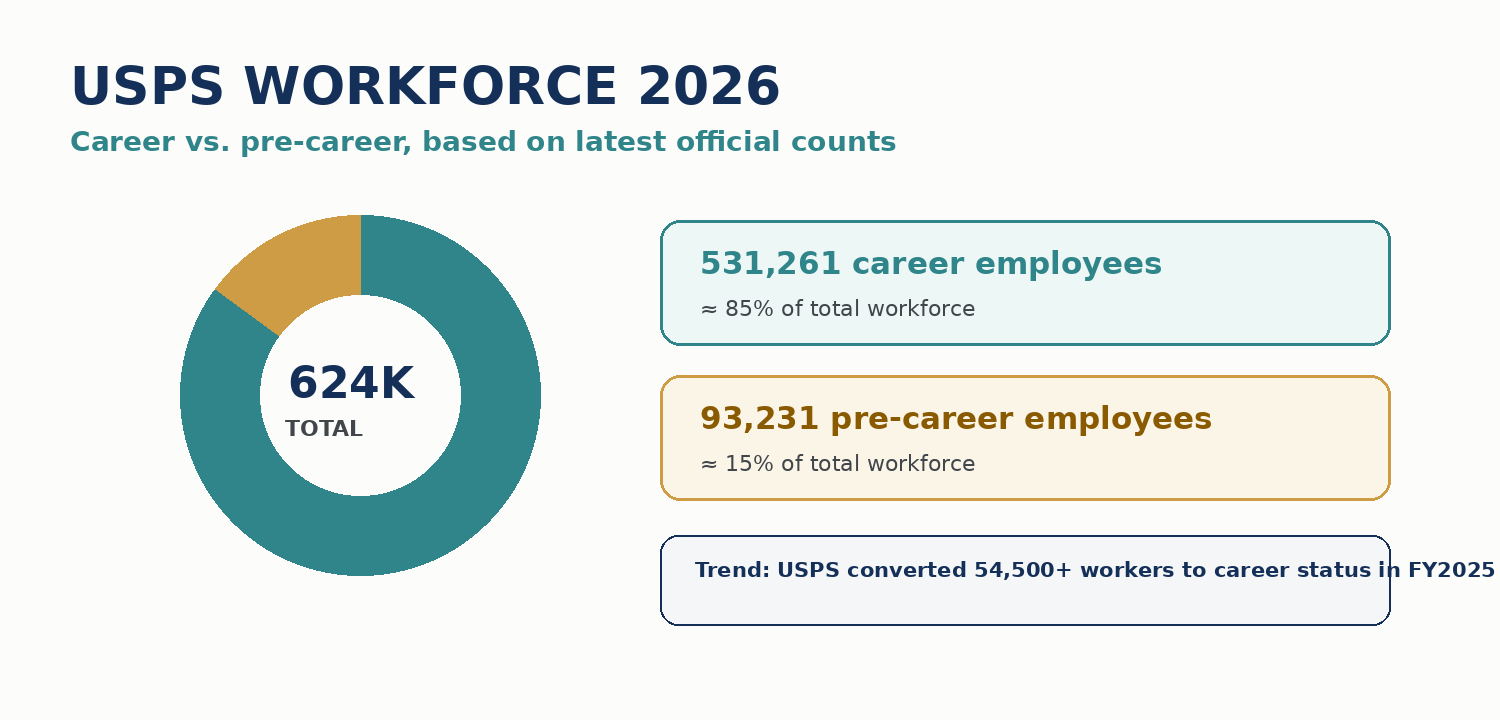
The latest full USPS workforce breakdown available in 2026 comes from the FY2025 Annual Report to Congress. Career employees make up roughly 85% of the workforce, while pre-career employees account for about 15%.
|
|
Career vs. Pre-Career
|
|
|
Largest Employee Groups
|
|
|
|
|
|
|
|
|
|
|
|
|
|
|
Why This Matters to Applicants
The appointment type changes the meaning of the job offer. A pre-career role can still be a strong entry point, but the benefits, schedule, and long-term path differ from a career appointment.
When comparing post office jobs, read the appointment type and benefit language before deciding whether the role matches your goals.
Warehouse-Style Roles
Processing, sorting, handling, and warehouse-style roles remain a large part of postal operations. These positions suit applicants who prefer plant-based work over delivery routes or retail counters.
Compare opportunities such as USPS Warehouse Associate with other processing and logistics jobs to see which environment fits you best.
Quick Applicant Checklist
- Confirm career, pre-career, seasonal, or temporary status.
- Compare health, retirement, and leave language.
- Check whether conversion to career is possible.
- Review shift, physical demands, and commute.
- Do not assume similar job titles provide the same benefit package.
Frequently Asked Questions
Is USPS mostly career employees?
Yes. The latest official breakdown shows career employees make up the clear majority.
Does pre-career mean temporary?
Not always. Some pre-career jobs continue on an ongoing basis, but they remain distinct from career status.
Can pre-career workers become career employees?
Yes. USPS continues converting many workers based on contractual provisions and operational needs.
Why does the distinction matter?
It affects benefits, retirement, leave, job stability, and expectations.
